
Holy Anointing Oil
- Posted on MarpmWed, 22 Mar 2017 14:52:58 -05002017-03-22T14:52:58-05:0002 17, 2016
- in Bible, God, Hebrew, Ki Tisa, Messiah, Study, Torah, Yeshua
- by Hallelujah Girl


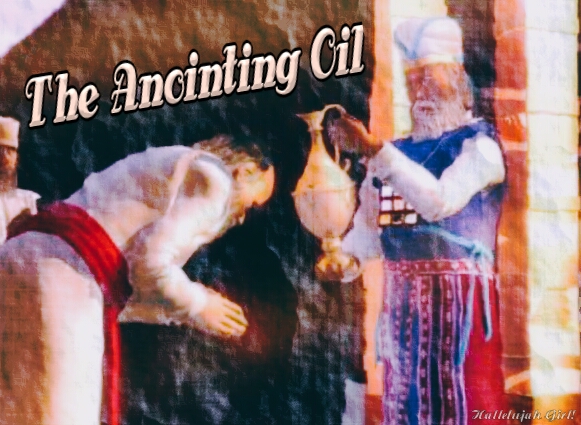 Moses was commanded in the portion Ki Tisa, כי תשא, to compound a mixture of oil and spices that would be used to anoint and consecrate all the vessels of the Tabernacle, and also Aaron and his sons, for their tasks. The oil was to sanctify and make them holy. And whatever touches them will become holy. Exodus 30:22-33 fully describes the manufacture of the ointment oil and how it was to be made by Moses himself. It’s function was to achieve a high degree of dedication to the Holy One’s will.
The ingredients are most interesting. It is forbidden to manufacture an exact duplicate for an attempt would risk you being “cut off” from the people of Israel (Exodus 30:33). The exact translation of all the spices in these passages are not definitely known, but it sure makes for a nice study…
The first ingredient is myrrh, or mor (מר) in Hebrew. The first letter is the mem (מ), representing water or a means to release. The letter mem is one of “cleansing”. The second letter is the reysh (ר), a picture of a “head”, or ‘what is first, chief’. The head is the source of knowledge, intelligence, or discretion. The Hebrew word for myrrh comes from the root word maror,מרר, (pronounced maw-rar), meaning “to be bitter”. The first we see the word maror in scripture is Genesis 49:23: “The archers were bitter and shot arrows and were hositle towards him”. This was part of Jacob’s (Israel’s) blessing over Joseph and if you continue to verse 24 you see that “his bow was always filled and his arms quickly moving–by the hands of the Mighty One of Jacob.”
The next ingredient listed is one we all know very well, cinnamon. Qinnamon, קנמון, (pronounced kin-naw-mone) is the Hebrew word. The word qinnamon is from an unused root (meaning to erect) for it’s bark is upright. It has a “sweet” fragrance that is rich and full bodied, it permeates the atmosphere.
Kaneh Bosem, קנה בשם , or fragrant cane is what my English translation says is next on the list. This ingredient is pronounced ‘kaw-neh beh-sem’. Kaneh is defined as a ‘stalk, reed, or branches’ and bosem is a ‘spice, balsam, or the balsam tree’. The identity of this item is under great debate and I do not wish to speculate. The Hebrew for basem paints a nice picture. The beit (ב) shows a ‘house or covering’, the shin (ש) represents ‘strength, truth, and peace‘, while the final mem (ם) depicts a ‘cleansing of the multitudes‘.
Cassia or “Kiddah”, קדה, in Hebrew (pronounced ‘kid-daw’) comes from the Hebrew word ‘kadad’, קדד, (pronounced ‘kaw-dad’). Kadad means ‘to bow down, bow low, or stoop‘. Seems fitting that the first this word makes an appearance in the scripture is in Genesis 24:26, the servant of Abraham is sent to find a wife for Isaac, after his prayer is answered, “Then the man bowed down and worshiped HaShem”.
All of the spices were to be mixed with a hin of olive oil. Now some say that a hin is almost a gallon and some say that it is almost two gallons. The olive tree or Zayith, זית, (pronounced zay-yith) is first seen in scripture in Genesis 8:11 “And the dove came in to him in the evening; and, low in her mouth was an olive leaf plucked off: so Noah knew that the waters were abated from off the earth.” Three Hebrew letters form the word zayith that should leave a lasting impression. The zayin (ז) snapshots a ‘weapon or a two edged sword’, ‘The Word’, or a ‘pursuit for perfection’. The yod (י) it’s image is a ‘hand’ meaning ‘to set things in motion’. The tav (ת) denotes a ‘cross, mark, or sign of renewal or regeneration’. What a stunning formula for the “Tree of Life”!
Holy anointing oil, or shemen mishchah kodesh. Mishchah is Hebrew for anointed. Yeshua HaMashiach is The Anointed One. The word kadosh (holy) is used to denote two concepts: (a) separation. The Holy One Himself is called Holy in the sense that He is so superior that He is separated, and this is what He expects of His People as well. (b) The term kadosh also implies the positive idea of total devotion to a higher purpose.
The anointment process combined both ideas: The Priests and the Tabernacle were withdrawn from mundane existence and dedicated to the service of The Holy One. Sound familiar? If we are to be the “dwelling place” of G-d then we should be separated from “worldly ideas” and know that our purpose is to serve Our Father with total devotion. Just as Our Messiah served His Father, so are we to model our lives, for Him!
Shalom, Happy day,
Hallelujah Girl
Tags: #ReadYourBible #ItsAllAboutYeshua #TorahIsTruth, anointing oil, Hebrew, Jesus, KiTisa, Torah Study, Yeshua